Alfredo Sauce Recipe Creamy, Rich & Better Than Any Restaurant
Ready in 15 Minutes
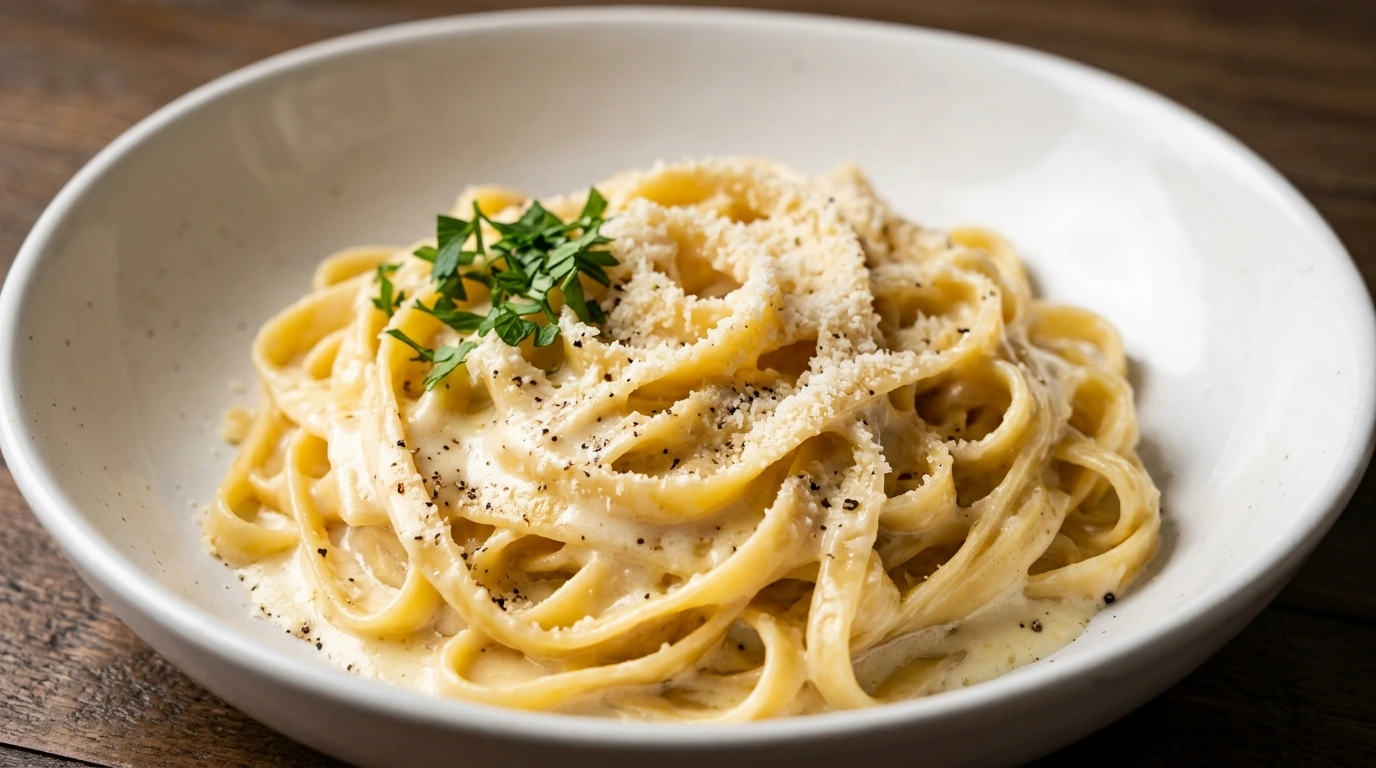
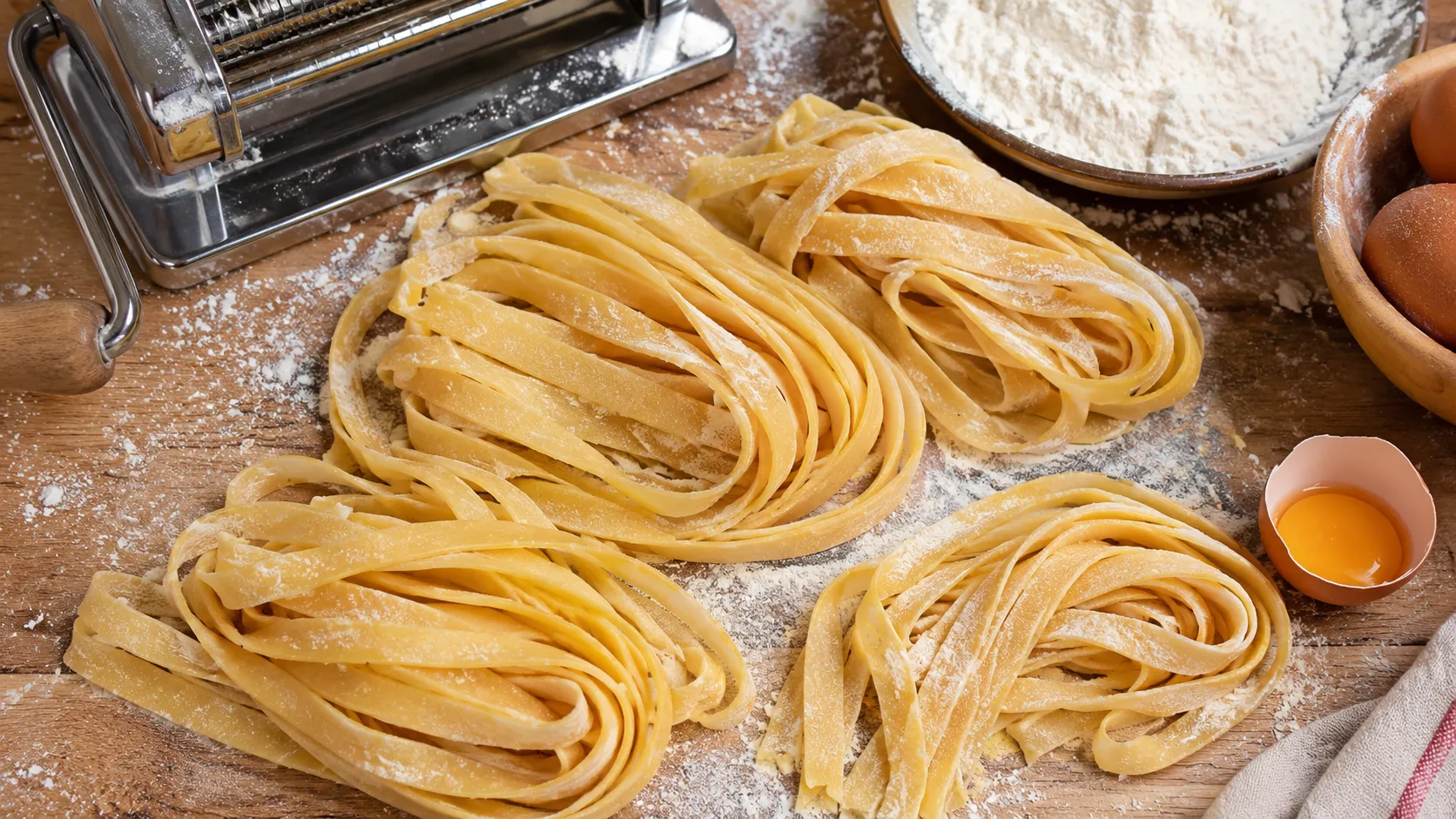
This is the only alfredo sauce recipe you’ll ever need. It’s rich, creamy, and comes together in just 15 minutes no jarred sauce, no Olive Garden trip required. I make this homemade alfredo sauce at least twice a month, and it beats anything I’ve had at a restaurant. With just a few simple ingredients, you can make the best alfredo sauce completely from scratch. Toss it with fettuccine alfredo and dinner is done.
What Is Alfredo Sauce?
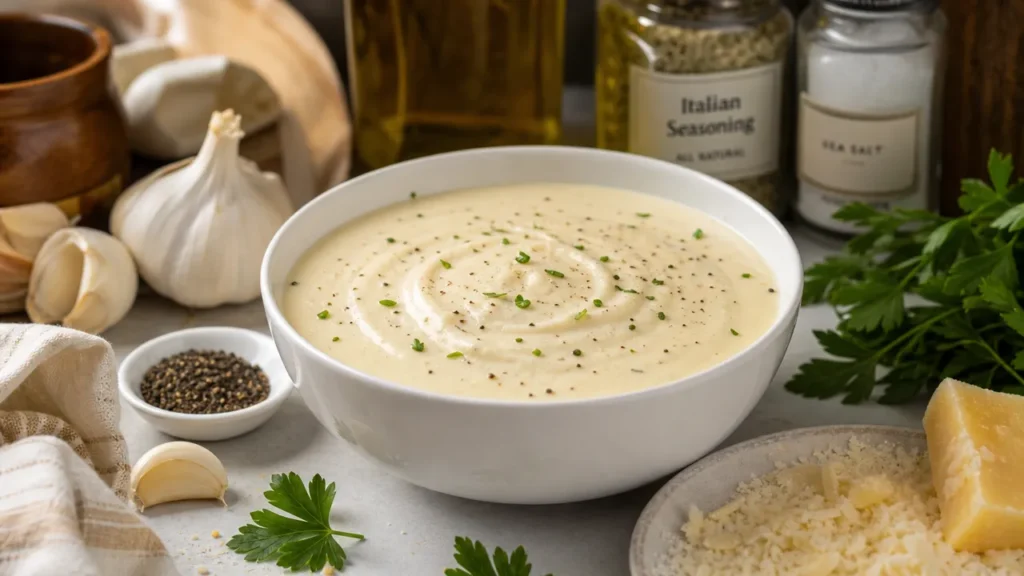
Alfredo sauce is a rich, creamy pasta sauce from Italian cuisine. It uses simple ingredients but tastes smooth and comforting. A classic alfredo sauce recipe usually combines butter, Parmesan cheese, and heavy cream. When mixed correctly, the sauce becomes silky and glossy.
I love homemade sauce because the flavor tastes fresher and more balanced. Freshly grated Parmesan cheese also melts better than packaged cheese. That small detail changes the whole texture.
Many people compare alfredo sauce to bechamel sauce, but they are different. Bechamel uses milk and flour, while Alfredo relies on a creamy base from butter, cheese, and cream. The result feels richer and thicker, especially with fettuccine or other pasta dishes.
What Is Alfredo Sauce Made Of?
Alfredo sauce needs just a few simple ingredients. You probably already have most of them. Here’s what goes into a classic recipe:
That’s it. A true 4 ingredient Alfredo sauce Recipe skips the garlic and cream entirely. But I find this version tastes so much better.
Alfredo Sauce vs Carbonara Key Differences
People mix these two up all the time. Both are creamy pasta sauces from Italian cuisine but they’re made very differently. Alfredo uses butter, heavy cream, and Parmesan. Carbonara uses egg yolks, Pecorino Romano cheese, and guanciale (or bacon). No cream at all.
The creamy base in carbonara comes from whisking eggs with cheese. The heat from pasta does the rest. Same silky result. A totally different method. If you’ve only tried one, you’re missing out.
Fettuccine Alfredo Sauce With Half and Half is a creamy, lighter alternative to traditional Alfredo that uses half and half instead of heavy cream while still delivering rich flavor and a smooth, satisfying texture.
Why This Alfredo Sauce Recipe Works Every Time
This homemade alfredo sauce Recipe stays rich, smooth, and creamy every single time. I tested this easy alfredo sauce more than 20 times from scratch. The method uses simple ingredients, pantry staples, and gentle heat. That keeps the sauce silky instead of greasy. In my experience, this creamy alfredo sauce tastes better than Olive Garden with fresher flavor and balanced texture.
My Personal Story
My love for fettuccine Alfredo started when I was about twelve. My mom made it on Friday nights, and it always felt special — like restaurant food at home.
When I tried making it from scratch myself years later, it was a total disaster. The sauce turned grainy. Sometimes it became too thick. One batch completely broke and looked like scrambled eggs floating in butter. I was honestly embarrassed to serve it.
For almost two years, I went back to jarred Alfredo sauce.
Then one winter evening, I decided to try again. I slowed everything down: lower heat, better cheese, and freshly grated Parmesan instead of the pre-shredded kind. That batch changed everything. The sauce turned silky, creamy, and perfectly coated the pasta.
Since then, I’ve tested this recipe more than 20 times for family dinners, picky kids, and casual guests. Today, this easy Alfredo sauce is one of the most requested meals in my house.
The Moment This Recipe Finally Clicked For Me
The big change came when I stopped rushing. I used to turn the heat up too high to make the sauce faster, but that was exactly what caused it to break every time.
Once I switched to medium-low heat, everything changed. The butter melted slowly, the cream thickened gently, and the freshly grated Parmesan melted in smoothly little by little. The sauce turned glossy and silky. It clung to the pasta instead of sliding off. That rich, balanced flavor I had been chasing for so long was finally there. Making creamy Alfredo sauce from scratch suddenly felt simple.
Common Mistakes Most People Make
I made every one of these errors. Learn from me.
Pre-shredded cheese has coatings that stop it from melting properly. You’ll end up with a grainy texture every time. Always grate from a block.
High heat makes the fat separate. The sauce breaks and you’re left with excess oil pooling on top.
Dump it all in at once and it clumps. Add it slowly, a handful at a time.
A hard boil will wreck the emulsion. Once fat and water separate, you get a greasy, separated sauce.
This is your safety net. Don’t pour it down the drain.
Alfredo Sauce Ingredients A Complete Breakdown
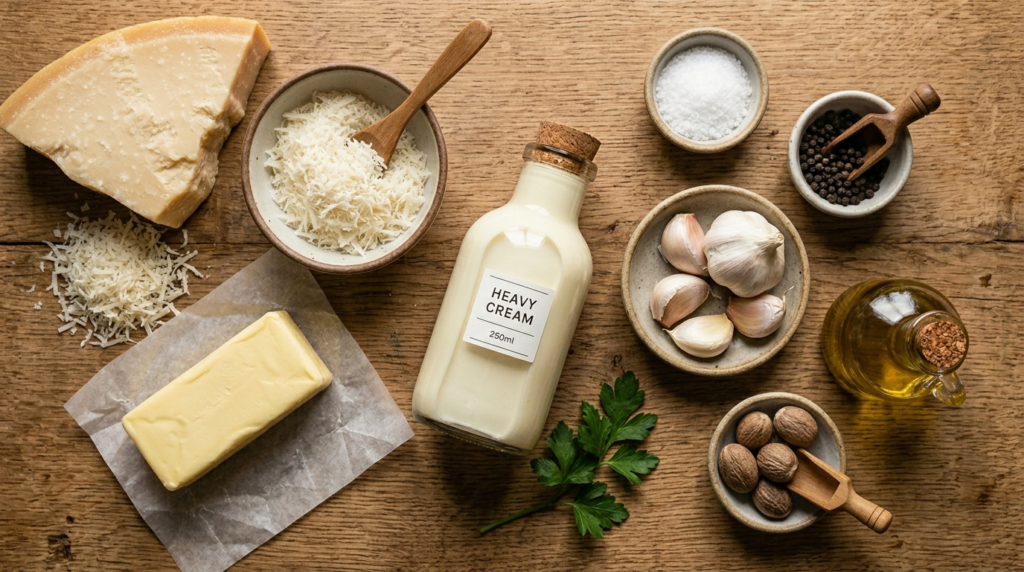
The best alfredo sauce Recipe ingredients are simple and easy to find. Most come from everyday fridge staples and pantry staples already at home. If you wonder what you need to make alfredo sauce, this recipe uses 6 ingredients plus seasonings. These basic ingredients create a rich, creamy sauce from scratch without complicated cooking steps.
Use unsalted butter so you control the salt yourself. I’ve tried both unsalted and salted. Unsalted gives you more control over the final flavor profile.
If you can find European butter, use it. It has a higher butter fat content, which means a richer, creamier sauce. Regular American butter works fine too. Some recipes use olive oil, but butter is what gives Alfredo its classic taste.
Heavy cream is what gives this sauce its thick, creamy base. Don’t swap it for half and half or whole milk; the sauce won’t thicken the same way.
Heavy whipping cream works just as well and is often the same thing with a different label. I’ve tested both many times. The higher the fat content, the better your fettuccine Alfredo will turn out.
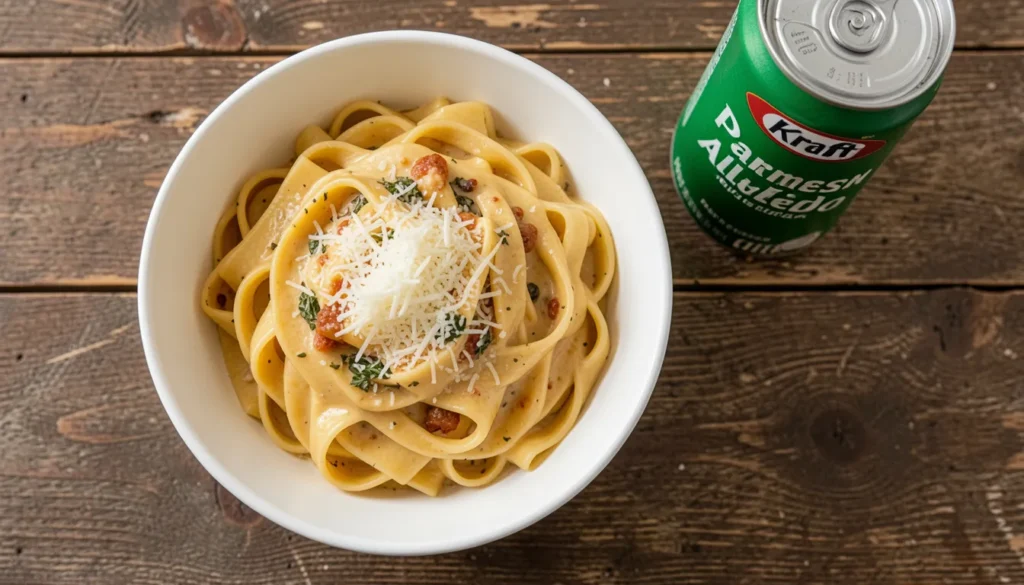
This is the most important ingredient. Use freshly grated Parmesan from a block, not shaker-style cheese from a can.
Pre-grated cheese has anti-caking powder that stops it from melting smoothly. A microplane or the small holes on a box grater work best.
Parmigiano-Reggiano is the gold standard. Pecorino Romano is sharper and works well mixed in. Either way, grate it fresh, every time.
Fresh garlic makes a real difference here. I use two cloves, finely minced or grated on a microplane so it melts right into the butter.
Garlic powder works in a pinch, but it doesn’t give you the same depth of flavor. Cook the garlic on gentle heat for about 60 seconds, just until fragrant.
Don’t let it brown or it turns bitter.
Season carefully. Parmesan is already salty, so taste before you add kosher salt. Freshly cracked black pepper is best; it adds a mild heat that balances the richness.
The real secret? A small pinch of nutmeg. Freshly grated nutmeg is ideal, but ground nutmeg works too.
It adds warmth without being obvious. You won’t taste it, but you’ll notice when it’s missing.
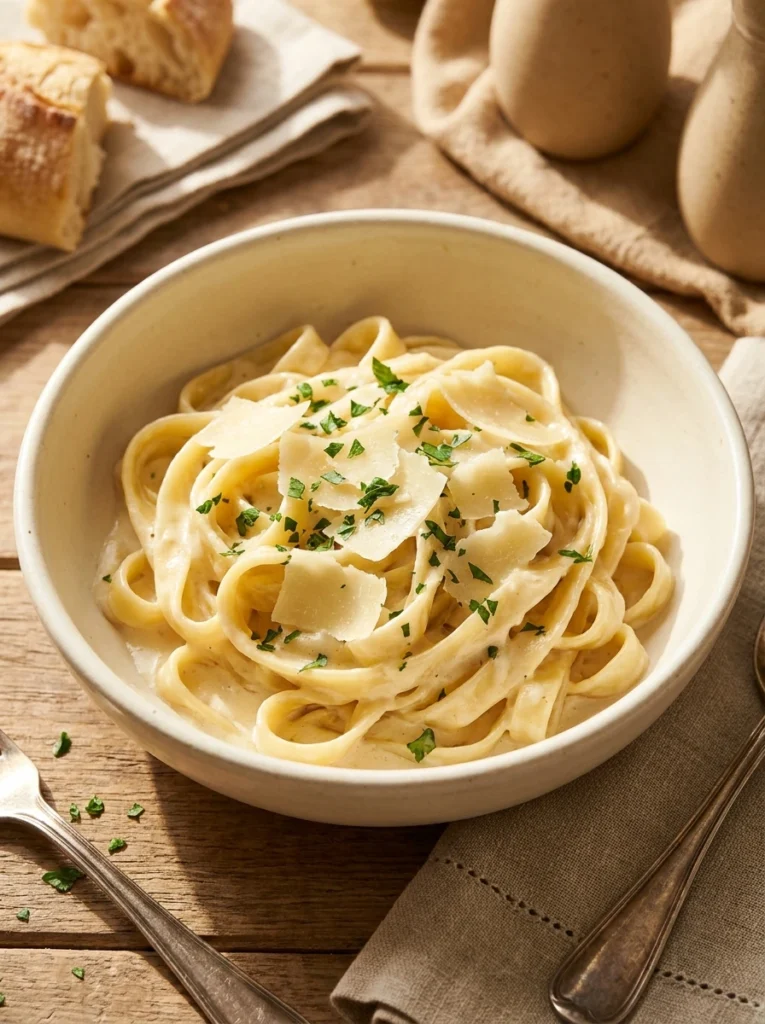
Best Homemade Alfredo Sauce Recipe
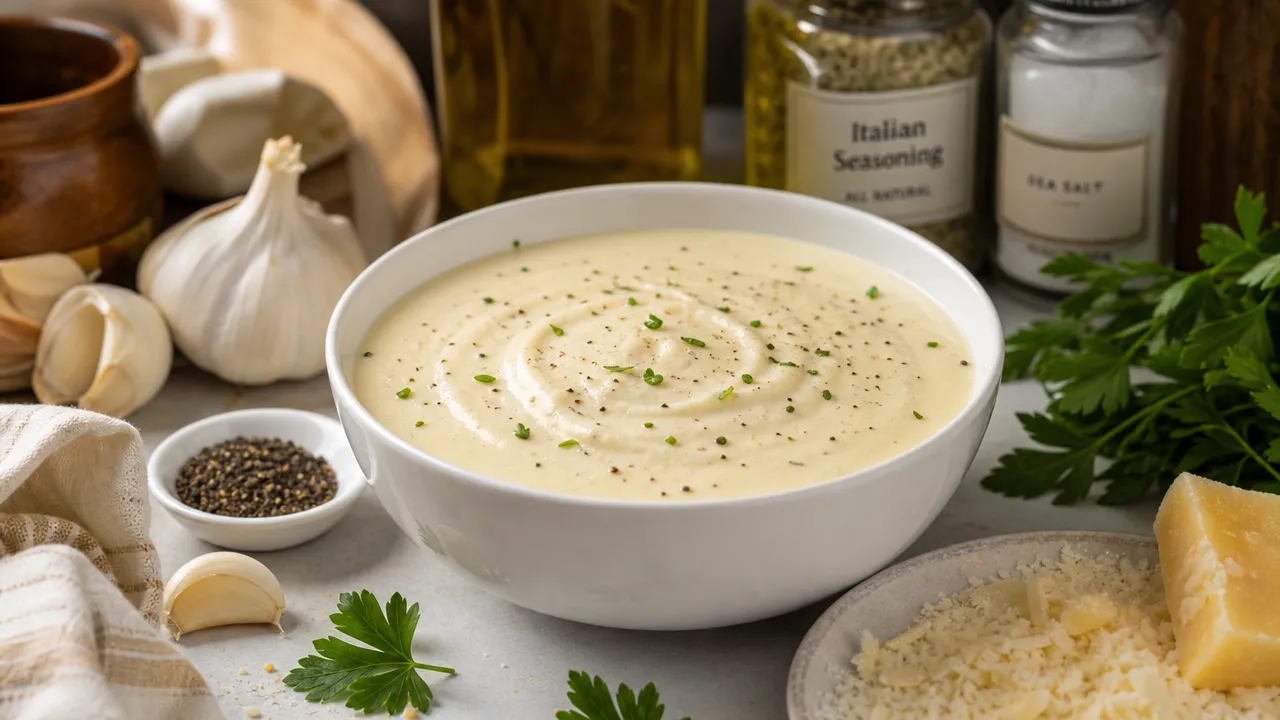
This Easy Alfredo sauce recipe is rich, creamy, and incredibly easy to make with just a handful of simple ingredients. Fresh Parmesan cheese, butter, heavy cream, and garlic come together to create a silky homemade sauce that’s perfect for fettuccine, chicken, shrimp, or your favorite pasta. Ready in just 15 minutes, it’s a classic comfort food recipe the whole family will love.
Ingredients
Equipment
Method
Melt butter with olive oil in a large saucepan over medium-low heat.
Add garlic and sauté for 1 minute until fragrant.
Pour in heavy cream, whisk gently, and simmer for 3–4 minutes.
Lower heat, then add Parmesan and Pecorino Romano gradually, whisking until smooth and creamy.
Season with nutmeg, Italian seasoning, salt, and black pepper.
Adjust consistency with reserved pasta water if needed.
Serve immediately over hot fettuccine, chicken, or shrimp. Garnish with parsley and extra cheese.
Notes
Why Freshly Grated Cheese Matters (And Why Bagged Cheese Fails)
This single step separates a smooth sauce from a grainy one. Bagged cheese and shaker style cheese both contain anti caking agents. Those coatings stop the cheese from melting properly. Instead of a silky sauce, you get clumps and a gritty texture.
| CHEESE TYPE | RESULT | VERDICT |
|---|---|---|
| Parmigiano-Reggiano block (microplane) | Melts instantly, silky smooth sauce | Best choice |
| Domestic Parmesan block (box grater) | Melts well, good result | Good choice |
| Pre-shredded bagged Parmesan | Clumps, anti-caking coating | Avoid |
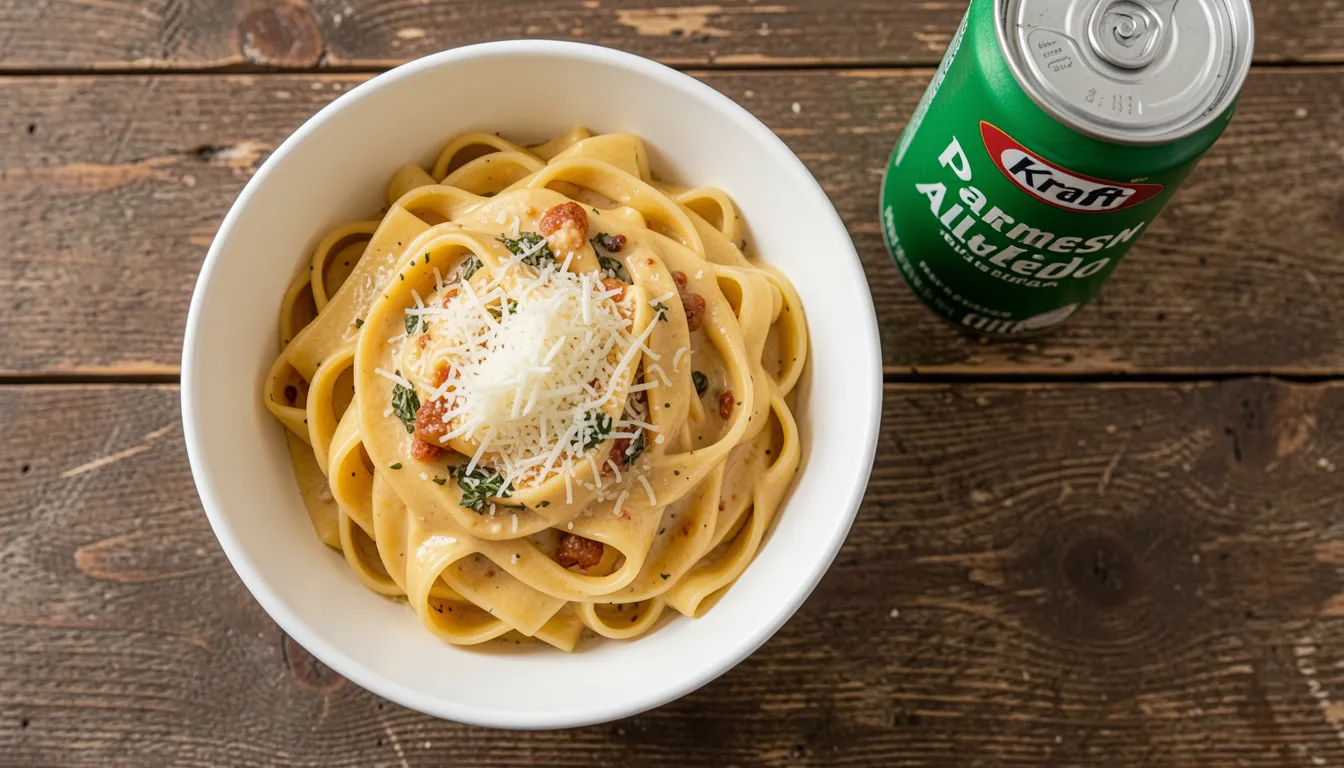
| Shaker / green can Parmesan | Grainy texture, won’t melt properly | Never use |
How to Make Alfredo Sauce Recipe From Scratch at Home
This homemade alfredo sauce is rich, creamy, and surprisingly simple to make. I love this easy alfredo sauce Recipe because it uses basic ingredients and cooks quickly. In the next steps, I’ll show you how to make alfredo sauce Recipe from scratch at home using a large saucepan or skillet over medium low heat.
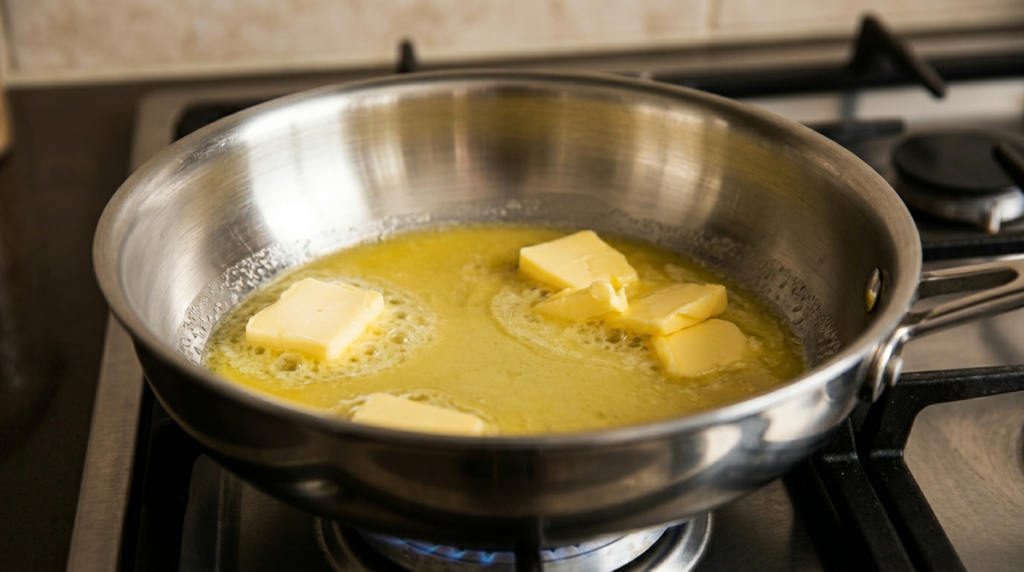
Step 1: Melt the Butter
Set your large saucepan over medium-low heat. Add the unsalted butter and let it melt slowly, don’t rush it. You want it melted and gently bubbling, not browning. If it starts to sizzle loudly, turn the heat down. Low and slow is the whole game here.
Step 2: Cook the Garlic
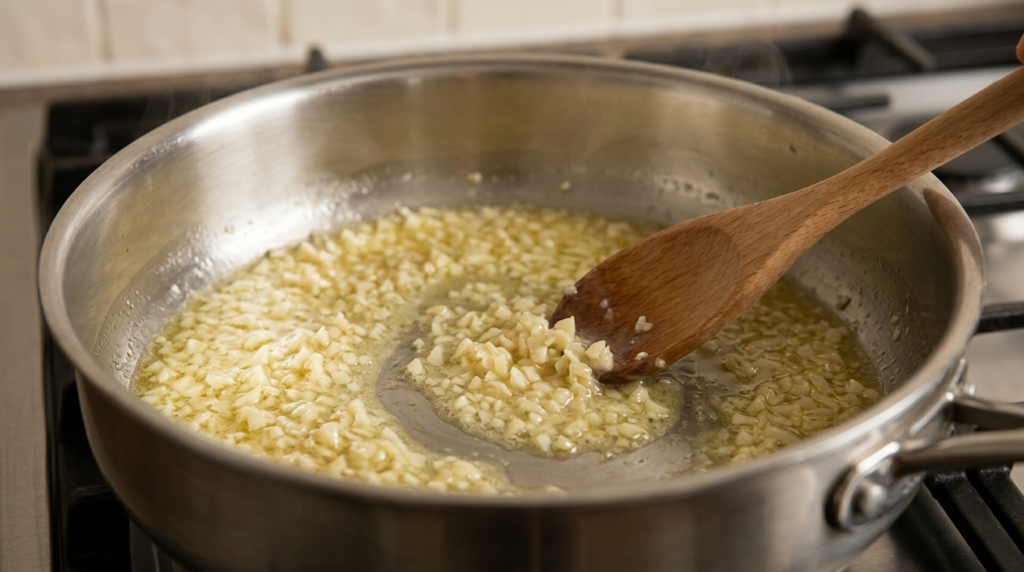
Add your minced garlic to the melted butter and stir with a wooden spoon. Keep the heat at medium-low. Cook for about 60 seconds just until it smells fragrant. That’s all it needs. Don’t let it turn golden or brown. Burnt garlic turns bitter fast and it will throw off the whole flavor of the sauce.
Step 3: Add the Cream
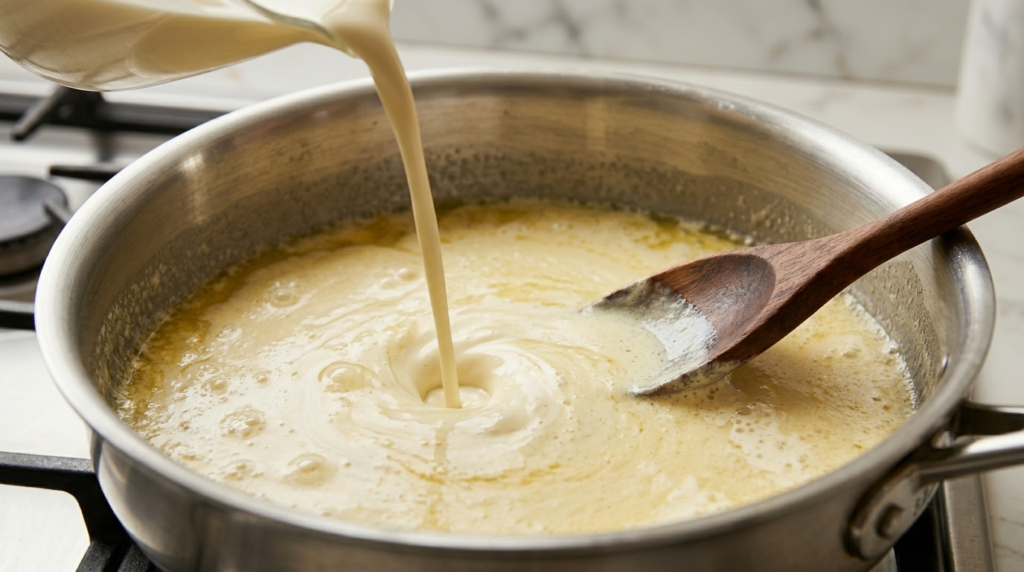
Pour in the heavy cream and stir to combine with the butter. Let it come to a gentle simmer, not a boil. Keep the heat at medium-low and stir frequently. In about 3 to 5 minutes, the sauce will start to thicken slightly. You’ll see it coat the back of your spoon. That’s your cue to move on.
Step 4: Add the Cheese
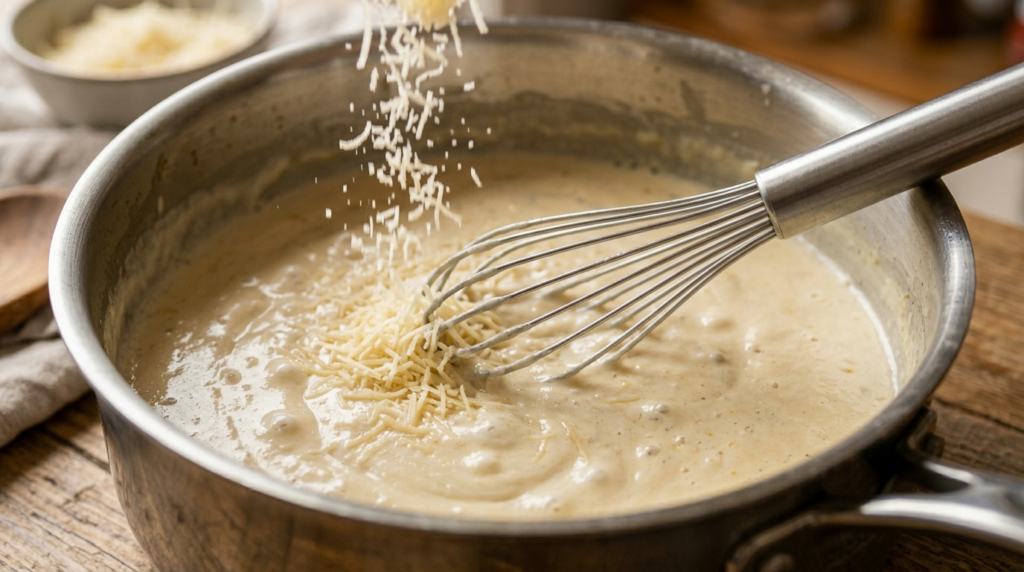
Turn the heat to low. Add your freshly grated Parmesan a small handful at a time, whisking constantly as you go. Don’t rush this part. Each addition should be fully melted before you add more. Once the cheese is all in and the sauce looks smooth and glossy, taste it. Add kosher salt and black pepper as needed.
Step 5: Toss With Pasta
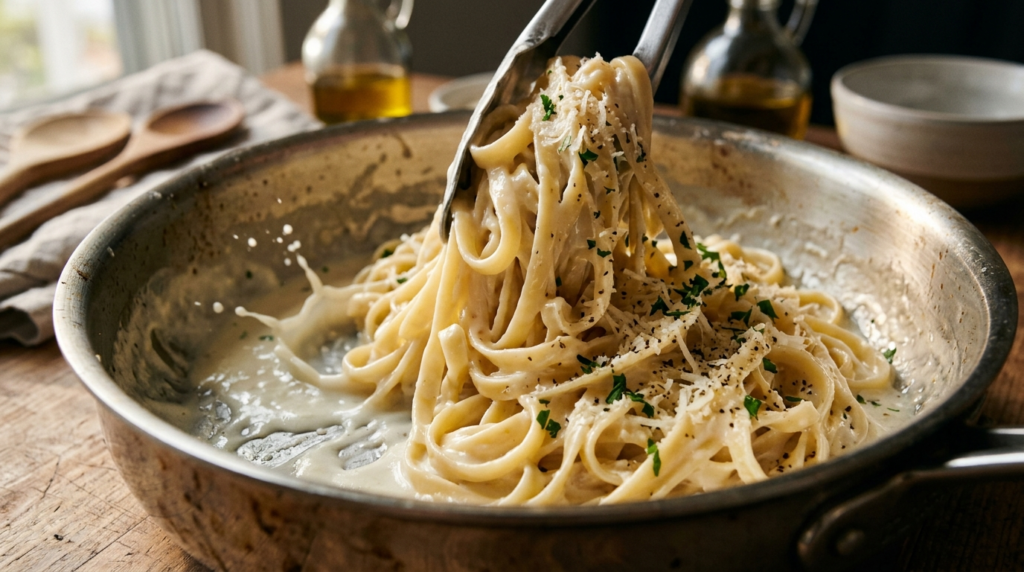
Add your al dente fettuccine straight into the pan and toss to coat. If the sauce feels too thick, add a splash of the starchy pasta water you saved. It loosens the sauce without watering it down. Serve immediately. Finish with extra Parmesan and a little chopped parsley if you like. The sauce should look glossy and cling to every strand.
What Is the Secret to a Good Alfredo Sauce?
Three things: the right ingredients, low heat, and patience. Freshly grated Parmesan, good butter, and a sauce that never boils. Get those three right and you’ll have a silky, glossy result every single time. It really is that simple.
Cooking Tips for the Best Alfredo Sauce Recipe
How to Know When Sauce Is Perfect Consistency
Why Alfredo Sauce Breaks (And How to Fix It)
A broken sauce is the most frustrating thing in cooking. One minute it’s silky the next it’s a greasy mess with excess oil floating on top. It happens to everyone. The good news? Once you understand why it breaks, you can fix it in under 60 seconds.
What Is an Emulsion?
Why Fat and Water Separate
Heat is almost always the reason a sauce breaks. When you push the temperature too high, the fat in the butter and heavy cream stops holding together with the water. They split apart. You’re left with a greasy, separated sauce — excess oil on top and a watery, grainy texture underneath.
Adding Parmesan too fast causes the same problem. The proteins in the cheese seize up before they can melt in smoothly. The fix is always the same: lower heat, slower pace.
How Pasta Water Fixes It
Pasta water is liquid gold. Don’t pour it down the drain. When pasta cooks, it releases starch into the water. That starch acts like a bridge between the fat and the water in your sauce. A small splash helps pull a broken sauce back together into a smooth, glossy emulsion.
It also loosens a sauce that’s gone too thick — without watering down the flavor the way plain water or milk would. Always save at least half a cup before you drain the pasta.
How to Fix Broken Alfredo in Under 60 Seconds
Broken alfredo sauce looks greasy and separated — but don’t panic. It’s an easy fix. Here’s what I do:
The starchy pasta water helps re-bind the fat and liquid. Within 60 seconds, you’ll have a smooth sauce again. I’ve saved many “broken” pans this way.
The Origin of Alfredo Sauce The 1914 Rome Story
The story behind authentic Alfredo Sauce Recipe is surprisingly simple — and touching. In 1914, a Roman restaurateur named Alfredo di Lelio created the dish for his wife. She had just given birth and had lost her appetite. He wanted to make something she could actually eat.
His solution? Just butter and Parmesan cheese tossed with fresh pasta. No heavy cream. No garlic. That was the authentic Italian original.
He opened his restaurant in Rome and served it tableside with a golden fork and spoon. Word spread fast. The dish became a symbol of Italian cuisine done simply and beautifully. Here’s what surprises most people: authentic Alfredo contains no cream at all. The classic Alfredo sauce recipe relied entirely on starchy pasta water and high-quality butter and cheese to create that creamy texture.
The version Americans know with heavy cream came later. It was adapted to suit local tastes and ingredient availability. Both versions are delicious. But knowing the origin helps you understand what really makes this sauce work.
How It Became Popular in America
Two Hollywood stars, Mary Pickford and Douglas Fairbanks, visited Alfredo di Lelio’s Rome restaurant on their honeymoon in 1927. They loved it so much they brought the recipe back to America. From there, Italian-American restaurants put their own spin on it. Cream was added. Garlic came in. The dish grew into what most of us know today as fettuccine Alfredo.
Alfredo Sauce Variations to Try
The classic recipe is amazing but sometimes you want to mix things up. These alfredo sauce variations let you swap ingredients based on your diet, taste, or what’s in your fridge. Whether you’re going vegan, dairy-free, or just craving something bold like cajun alfredo or chicken alfredo, there’s a version here for you.
How to Make Vegan Alfredo Sauce
You don’t need dairy to get a rich, creamy result. This vegan alfredo sauce uses soaked cashews blended with almond milk or coconut milk as the base. Add nutritional yeast for that cheesy, savory flavor.
- Soak cashews in water for 2 hours, then blend until silky smooth
- Use nutritional yeast — start with 3 tablespoons
- Add garlic, kosher salt, and black pepper to taste
- Serve over fettuccine for a great plant-based pasta sauce
How to Make Dairy-Free Alfredo Sauce
This dairy-free alfredo sauce swaps butter and cream for simple ingredients you likely already have. I’ve made it with both almond milk and coconut milk — and both work well.
- Use full-fat coconut milk for the richest, creamiest base
- Or use unsweetened almond milk for a lighter result
- Add olive oil in place of butter
- Season with garlic, kosher salt, and black pepper
Cottage Cheese Alfredo Sauce
This is my favorite hack for a lighter, high-protein alfredo. Cottage cheese alfredo sauce sounds strange — but once blended, it turns into a surprisingly smooth, creamy base.
- Blend 1 cup of cottage cheese until completely smooth — no lumps
- Add garlic, kosher salt, black pepper, and a splash of pasta water
- Stir in freshly grated Parmesan for flavor depth
Cauliflower Alfredo Sauce
Steamed cauliflower blends into a silky, creamy base that genuinely mimics the texture of the classic. It’s naturally dairy-free and gluten-free.
- Steam 2 cups of cauliflower florets until very soft — about 10 minutes
- Blend with garlic, kosher salt, black pepper, and pasta water
- Add olive oil for richness
Cajun Alfredo Sauce
Cajun alfredo sauce takes the classic creamy base and gives it a bold, spicy kick. Perfect with blackened chicken alfredo or cajun shrimp over fettuccine.
- Add 1 tsp cajun seasoning to your regular sauce
- Add ½ tsp smoked paprika for depth
- Add a pinch of cayenne pepper or crushed red pepper flakes for heat
Chicken Alfredo Sauce
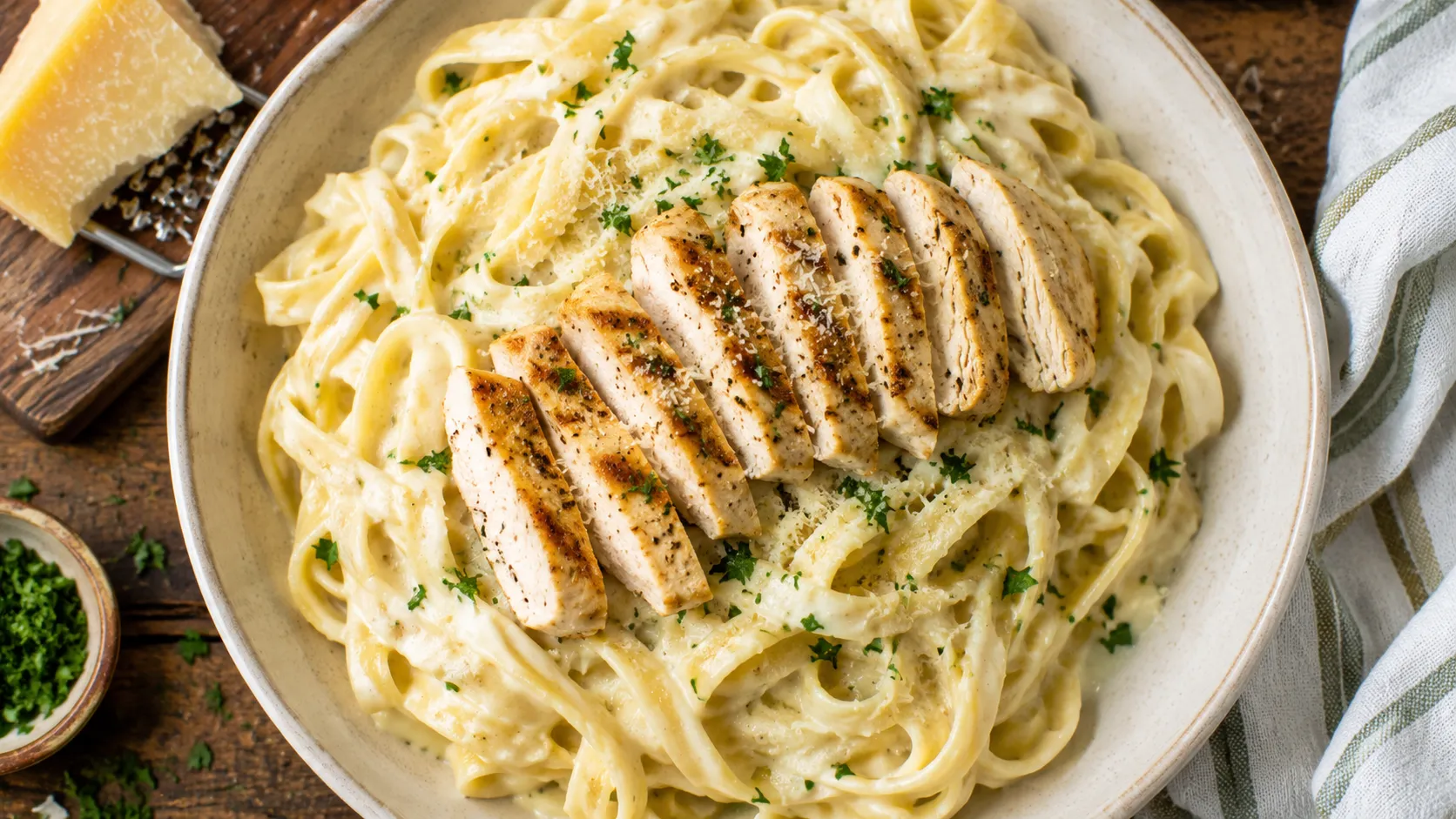
Chicken alfredo is the most popular way to serve this sauce — and for good reason. It’s a complete, family-friendly meal in one pan.
- Season chicken breasts with kosher salt, black pepper, and garlic
- Pan-sear in butter for 5–6 minutes per side until golden
- Slice and toss over fettuccine alfredo
Best Pasta & Pairings for Alfredo Sauce
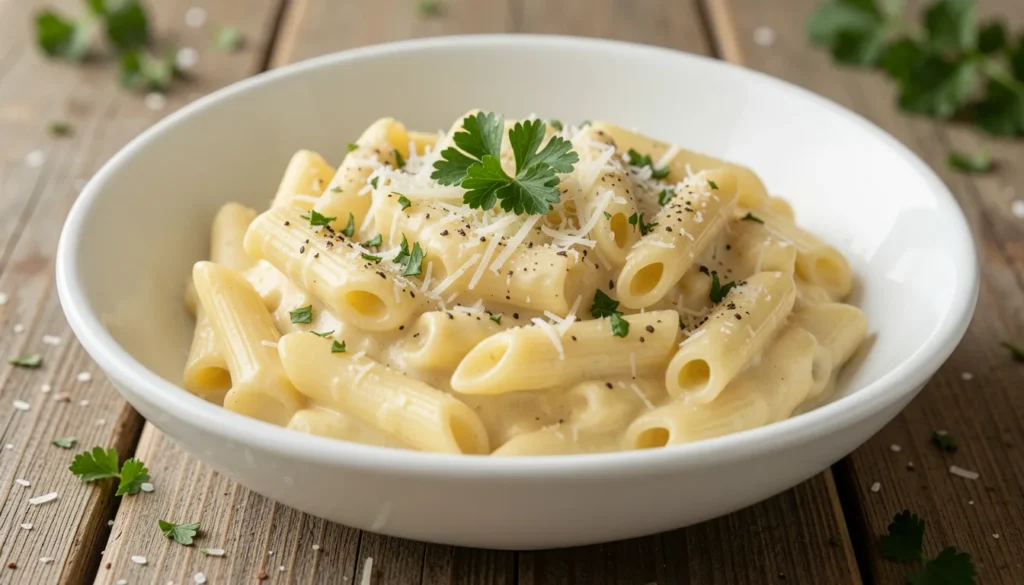
Alfredo sauce is thick and rich so it needs the right partner. The best pasta for alfredo sauce Recipe is something sturdy enough to hold all that creaminess.
Best Pasta Types






Protein Options
Adding protein turns alfredo into a filling meal. These three work best: Chicken — pan-seared and sliced, easy chicken alfredo is a weeknight staple. Shrimp — cooks in just 3 minutes, feels like a restaurant dinner. Salmon — pan-seared over fettuccine, rich, flaky, and seriously underrated.
What to Serve With Fettuccine Alfredo
Wondering what to serve with fettuccine alfredo to make it a complete dinner? Here’s what I reach for every time:
How to Store and Freeze Easy Homemade Alfredo Sauce



How to Store in Fridge
Let the sauce cool completely first — never seal it while it’s still hot. Then transfer your leftover sauce into an airtight container and refrigerate. It keeps well in the fridge for 3 to 5 days. One thing to expect: the homemade sauce will thicken up as it cools. That’s totally normal. A splash of milk or pasta water when reheating brings it right back to life.
Can You Freeze It?
You can freeze alfredo sauce Recipe, but I’ll be honest — it’s not ideal. The heavy cream tends to separate when thawed. If you do freeze it: store in an airtight container for up to 2 months, thaw overnight in the fridge, and whisk well while reheating on low heat. I prefer making a fresh batch instead — it only takes 15 minutes.
How to Reheat Without Breaking It
The stovetop is always my first choice. Heat on low, add a splash of milk to loosen the sauce, and stir constantly. Microwave works too — use 30-second bursts on medium power and stir between each one. Never blast it on high heat. That’s the fastest way to get a greasy, separated sauce.
Frequently Asked Questions (FAQs)

Meet Emily Carter
Hi, I’m Emily Carter, a recipe creator who loves making creamy pasta sauces and easy homemade meals. I share simple Alfredo sauce recipes, cooking tips, and kitchen ideas to help you create delicious comfort food at home.
Related Recipe